If you have a child in Grades 1 to 5 in Alberta, there's a good chance a reading and math report landed in your inbox or your child's backpack this fall. For a lot of families, it's the first time they've seen one.
That's because this school year is the first time Alberta schools must screen every student in Grades 1 to 5 in the fall, and the first year they're required to share those results with parents. Results are meant to reach parents within six weeks of the screening, which is why so many showed up in late October and November.
If your child's report says they need "additional support," you might be feeling a mix of things right now. Worried. Confused. Maybe a little relieved that someone else noticed what you've been seeing at home. All of that is normal. Here's how I'd think about what comes next.
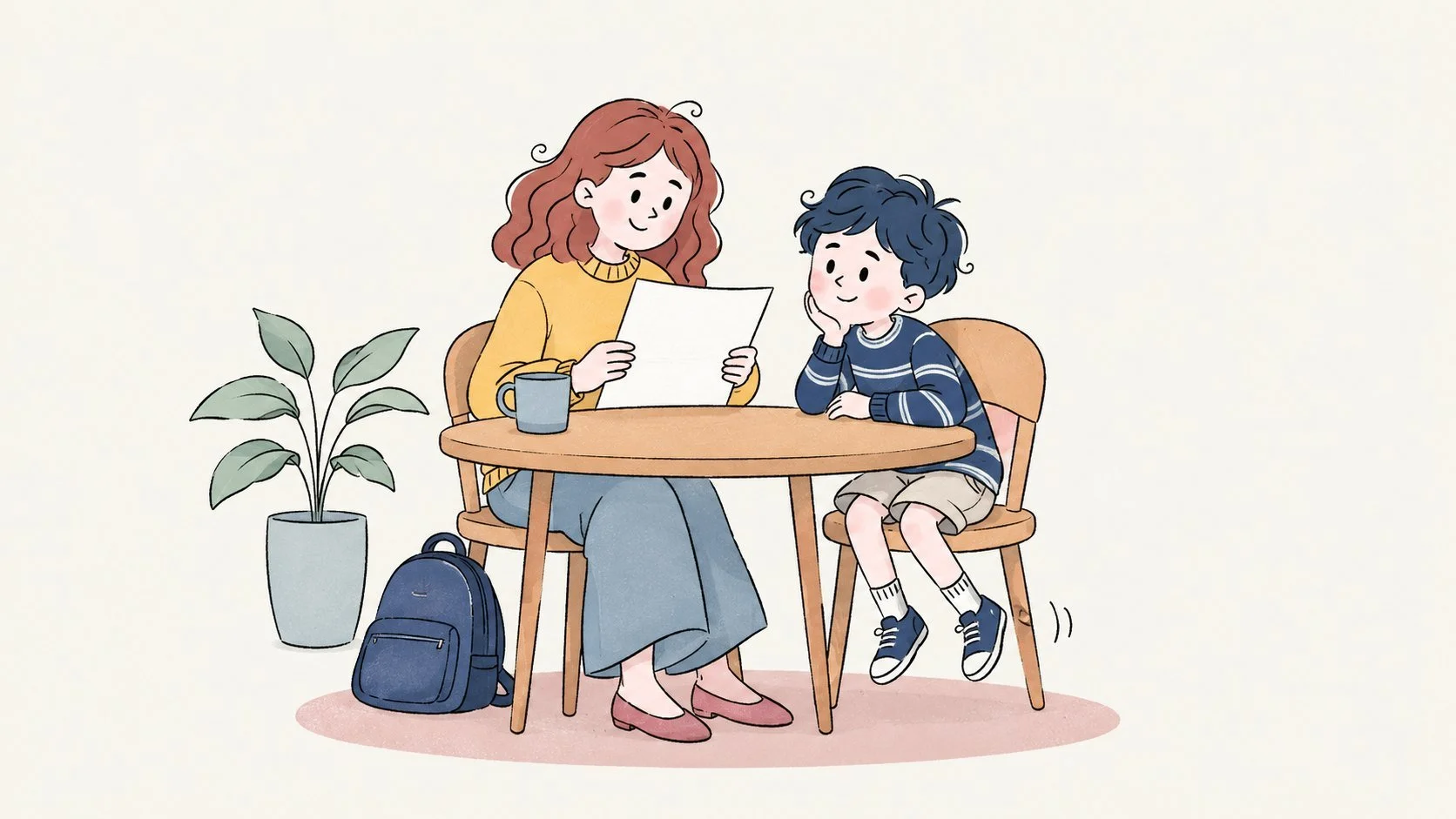
What the screener actually is
A screener is a short check of foundational skills. A teacher gives it at school, during the regular day. Literacy screeners look at things like letter sounds, decoding and reading fluency. Numeracy screeners look at things like number sense, place value and basic problem solving.
Your child's score is compared with other Alberta students in the same grade at the same point in the year. The report tells you three things:
whether your child needs extra support
which areas they're having trouble with
examples of the help the school can offer
That's useful information. It's just not the whole picture.
What a screener can't tell you
A screener can show you where your child is having a hard time. It can't tell you why, what's behind it, or what kind of help will work best for them.
A lower score can happen for many reasons. A child might have had an off day, felt nervous, missed school, or be an English language learner. They might have trouble with attention, or a learning disability that hasn't been identified yet. They might be anxious about school in a way that shows up in their work. The screener isn't built to sort those things out, and it isn't a diagnosis.
The reverse is true too. A result that looks fine doesn't always mean everything is fine. Some kids keep up on paper but work much harder than their classmates to get there. That gap between effort and results is often a clue in itself.
What happens next at school
When the screener shows a child needs more support, schools are required to provide intervention supports to help them build those skills. That might look like small-group instruction, one-on-one help or resources to use at home. Students in Grades 1 to 3 are screened again in the winter, and students who needed support are rechecked in the spring.
For many kids, that extra support at school is exactly what they need. So a good first step is a conversation with your child's teacher. A few questions you might bring:
What did you see in class that matches the screener, or doesn't?
What support will my child get, and how often?
How will we know if it's working?
Is this new this year, or has it come up before?
Is there anything beyond reading and math you've noticed, like focus, frustration or confidence?
When to think about an assessment
Waiting and watching is sometimes the right call. But you don't have to wait if your gut is telling you something more is going on. A psychoeducational assessment may be worth considering if:
The concerns have come up before, in earlier report cards or past years
The extra support has been in place for a while and isn't making much of a difference
Your child is working really hard for results that don't reflect it
You're seeing more than academics, like trouble focusing, homework meltdowns, avoiding school or saying things like "I'm just bad at this"
There's a family history of learning or attention differences
What a psychoeducational assessment looks at
Where a screener is a quick check, a psychoeducational assessment is a more comprehensive review. It looks at how your child thinks, reasons, remembers and pays attention, along with their reading, writing and math skills and their emotional wellbeing. The goal is to understand how your child learns best and what's getting in the way.
Every assessment I do follows the same path. We start with an intake meeting to talk through your concerns and your child's history. Then I work directly with your child over one to three testing sessions. I also gather input from the people who know your child, including their teacher, and review things like report cards and past assessments. Finally, we sit down for a feedback session to go over the results together. See how the full process works.
You leave with a written report and clear recommendations. Those are things you can take back to the school and use at home. The screener told you your child may need support. The assessment helps explain why, and what to do about it.
Bring the screener with you
If you're not sure whether an assessment makes sense, that's what the free consult is for. Bring your child's screener report and any notes from the teacher. We'll talk through what you're noticing, and I'll help you figure out the right next step, whether that's an assessment with me or giving the school supports more time.
I see families in Calgary, and in Red Deer on regular days through the month.