On November 1, for the first time, Albertans didn't turn their clocks back. The province is now on Alberta Time year-round, which is the same time we used to keep only in the summer.
We didn't lose any daylight. It just moved. Evenings are brighter than they used to be in winter, and mornings are darker. In Calgary, the sun rises after 9 a.m. from about November 19 to February 9, and on the shortest day of the year it won't come up until about 9:37 a.m. In Red Deer, it's closer to 9:42 a.m.
People have a lot of opinions about the change, and I'm not here to add another one. What I'm hearing from clients is simpler: mornings feel harder right now. If that's you, here's what might be going on, and what can help.
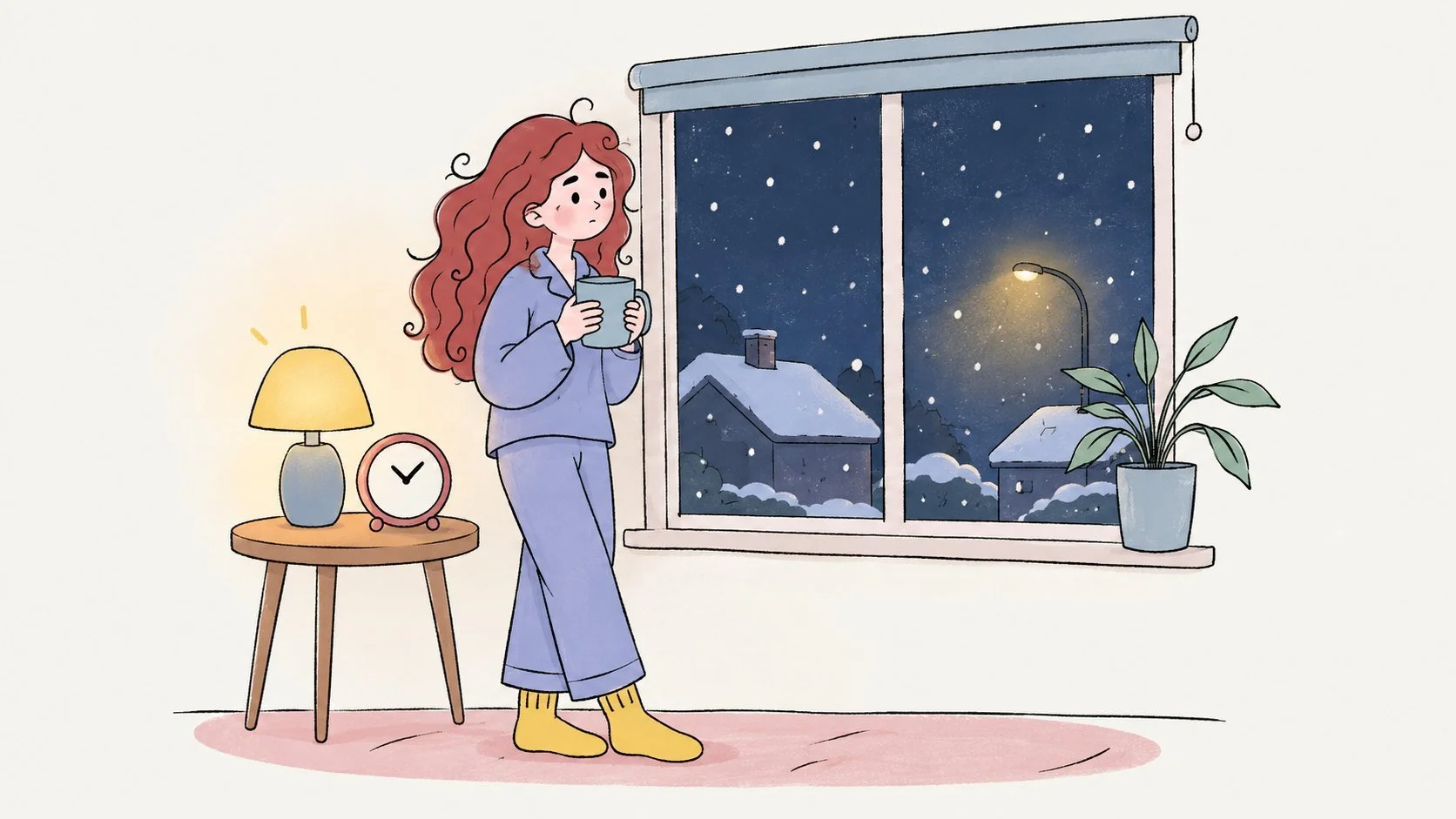
Why dark mornings are hard on everyone
Your body has an internal clock that runs on roughly a 24-hour cycle. Morning light is one of the strongest signals it uses to know the day has started. When you wake up in the dark, that signal comes later, or not at all before you're out the door.
Sleep researchers have a name for the gap between your body's clock and the clock your work or school runs on: "social jet lag" (Journal of Clinical Sleep Medicine). It can look like:
Feeling groggy for longer after you wake up
Hitting snooze more than usual
Feeling a bit "off" or slow through the morning
Having a harder time falling asleep at night
None of this means something is wrong with you. It's a normal response to a real change, and it affects kids and teens heading to school in the dark too.
Why it can hit harder with ADHD
For many adults with ADHD, mornings were already the hardest part of the day.
Part of that is the body clock. Research shows many adults with ADHD have a body clock that runs later than average. In some studies, the sleep hormone melatonin starts rising about 90 minutes later in adults with ADHD than in adults without it (PMC review). That makes it harder to fall asleep at a "normal" time, and much harder to wake up early.
The other part is what mornings ask of you. In the first hour of the day you have to wake up, track time, remember what you need, make decisions and get out the door. All of that runs on the brain's planning and organizing skills, which are often the skills ADHD makes harder. Take away the morning light and you lose one more cue telling you it's time to get going.
So if this winter's mornings feel like they've turned the dial up on something you've always struggled with, that makes sense.
It might not just be the dark
Dark mornings are hard for everyone. But for some people, hard mornings didn't start this winter. Many of the adults I assess tell me mornings have always been a struggle: hitting snooze again and again, scrambling to get out the door, and feeling behind before the day has even started.
It may be worth looking closer if you've noticed patterns like these for most of your life, not just the last few weeks:
Running late, even when you really try not to be
Losing track of time, or realizing an hour went by without noticing
Misplacing keys, phones and wallets often
Leaving things to the last minute, then rushing
Feeling like you work twice as hard as other people to stay on top of things
Being called lazy or disorganized when it never felt that simple
Many adults with ADHD were never identified as kids. Sometimes they did well enough in school, or they found ways to cope that worked until life got busier. An adult ADHD assessment can give you a clear answer, and recommendations that fit your real life. Learn more about ADHD assessments.
When it's more about mood
Dark, cold months can also affect how you feel. About 15% of Canadians will have at least a mild episode of seasonal affective disorder in their lifetime, and 2 to 3% will have a more serious one, according to the Canadian Psychological Association.
Feeling a bit flat in January is common. It's worth reaching out if, for two weeks or more, you've felt down most days, lost interest in things you usually enjoy, been sleeping much more or less than usual, or started pulling away from people. Low mood can affect how you think, too. You might notice brain fog, trouble focusing, a hard time making even small decisions, or feeling disorganized all of a sudden when that isn't usual for you. That's where counselling can help. Learn more about counselling. It's also a good idea to talk with your family doctor.
Small things that can help this winter
These won't fix everything, but they can make mornings a little easier:
Get light early. Open the blinds and turn on bright lights as soon as you're up. Some people find a light therapy lamp helps. Researchers suggest one rated at 10,000 lux, used for about 30 minutes in the morning (CBC News). Check with your doctor first if you have eye or mood concerns.
Keep your wake-up time steady. Try to get up around the same time on weekends, too. It helps your body clock settle.
Do the decisions the night before. Lay out clothes, pack the bag and put your keys by the door.
Use outside cues. An alarm across the room, a visible clock or a timer for each step of the routine can help when time feels slippery.
Get outside midday. Even a short walk at lunch gives your body clock a useful signal.
Go easy on yourself. A harder season isn't a personal failing.
When to reach out
If you've tried these and mornings still feel like a daily battle, or you recognize yourself in that list of lifelong patterns, it may be time for a closer look. That might mean an adult ADHD assessment, counselling for low mood, or both.
Not sure which one fits? That's what the free consult is for. We'll talk through what you're noticing, and I'll help you figure out the right next step.
If you're struggling and need support right away, you can call or text 988 any time to reach the Suicide Crisis Helpline.